Americans Demand ‘Keep Christ in Christmas,’ Ignore Everything Christ Actually Said

Jules Cringeley
Mockitor of Trying Too Hard
Lifestyle & Trends Contributor





Americans demand Christ stay in Christmas, while supporting policies that cut food, healthcare, and aid Jesus explicitly taught people to provide.
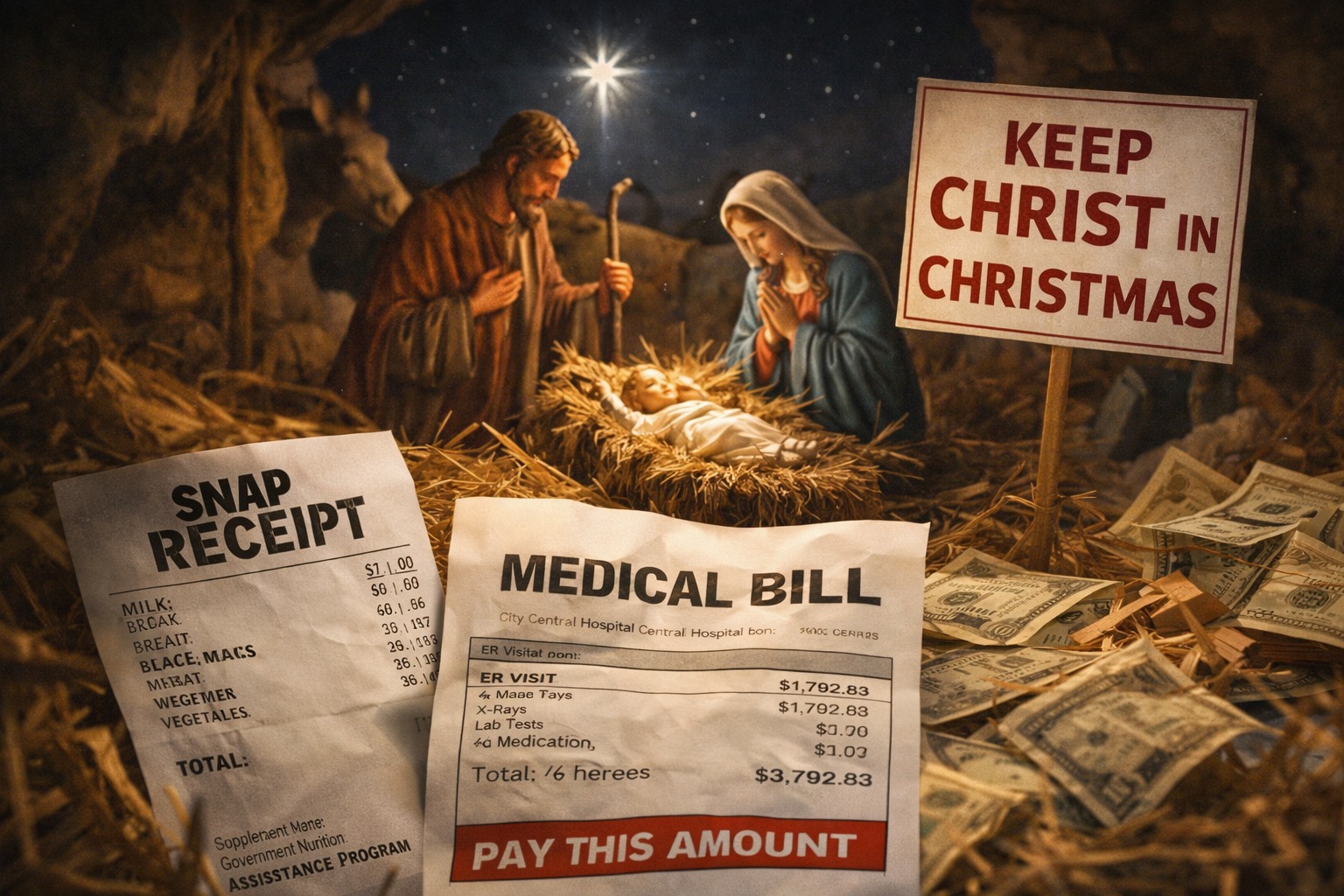
Every December, a familiar chorus returns. Keep Christ in Christmas. Yard signs appear. Posts multiply. People insist the holiday is under attack, usually from coffee cups, retail clerks, or anyone who says Happy Holidays with insufficient reverence.
It sounds like a call for faith. In practice, it is more like a branding exercise.
Because if Christmas were actually guided by Christ’s teachings, the holiday would look very different. It would be quieter. Less angry. And significantly more expensive for people who currently vote to cut programs Jesus would have spent most of his time defending.
Christ Was Very Clear About the Poor
The same voices demanding Christ stay front and center in December tend to disappear when food assistance comes up in January.
SNAP benefits are routinely targeted for cuts by politicians who post Bible verses next to Christmas trees. Medicaid expansion is framed as wasteful while millions rely on it to survive. Housing assistance is labeled dependency. Healthcare is treated like a privilege instead of basic care.
Christ fed people without asking for income verification.
America asks for paperwork, work requirements, drug tests, and proof you are desperate enough.
Healing Was Not Optional in the Gospels
Jesus healed the sick. He did not check their insurance. He did not ask whether they earned it. He did not lecture them about personal responsibility before helping.
Modern Christmas Christians often support systems that do the opposite. Coverage gets denied. Costs get shifted. Entire families are one illness away from financial collapse, then told this is the price of freedom.
If Christ were here today, he would not be hosting a fundraiser for private insurers. He would be in an ER waiting room asking why care depends on employment status.
The Stranger Was the Point
The nativity story itself centers on refugees. A family displaced. Turned away. Forced to give birth wherever someone finally allowed it.
Today, those same Christmas defenders cheer policies that separate families, criminalize asylum, and treat migrants as threats rather than humans. Refugees are described as invaders. Compassion is framed as weakness.
The irony is not subtle.
Charity Has Become a Seasonal Accessory
Christmas generosity is now confined to December and monetized into convenience. Donate a dollar at checkout. Post about it. Move on.
Christ did not preach seasonal empathy. He preached constant responsibility to others, especially the ones society prefers to ignore.
But permanent compassion is inconvenient. It costs money. It requires policy. And it does not fit neatly under a tree.
What People Really Mean
When Americans say Keep Christ in Christmas, they rarely mean follow Christ’s teachings. They mean protect tradition. Maintain cultural comfort. Preserve a version of Christianity that does not ask too much of them.
They want the baby in the manger, not the adult who flipped tables, condemned greed, defended the poor, and warned the wealthy repeatedly.
That Christ is harder to market.
Christmas Is Not Under Attack
Empathy is.
And if Christ returned today, he would not be arguing about holiday greetings. He would be asking why a country that invokes his name every December keeps ignoring him every other month.